
Standing in a bathroom showroom staring at glass panels all start to look the same after a while — sliding, swing, framed, frameless, and somehow every option claims to be the “perfect fit” for any space.
The reality is that shower enclosures genuinely do perform differently depending on your bathroom’s layout, size, and how the space actually gets used day to day, and picking the wrong type is an expensive mistake to notice after installation rather than before.
Here’s how to actually think through it, based on real bathroom constraints rather than showroom marketing.
Start With Your Bathroom’s Actual Layout
Before comparing finishes or glass types, the shape and size of the bathroom itself narrows things down fast. A compact bathroom and a spacious master ensuite genuinely need different shower enclosures, no matter how hard a salesperson pushes one style as the universal answer.
Small or awkward layouts generally do better with space-efficient designs — inward-folding panels or sliding doors that don’t need floor clearance to swing open. Larger bathrooms have more flexibility, since a swinging door doesn’t compete with limited floor space the way it would in a tighter room.
Swing Shower Enclosures
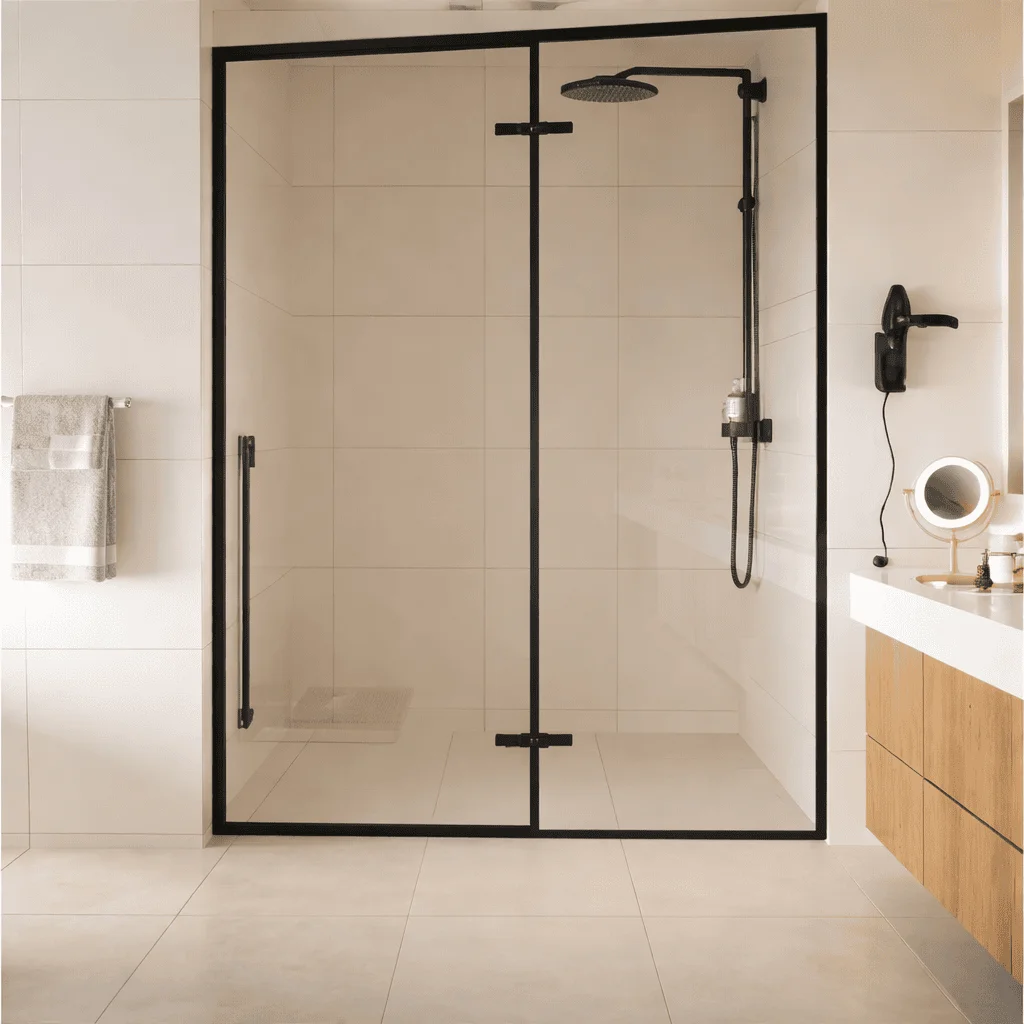
Swing shower enclosures open outward on a hinge, similar to a regular door, and they tend to suit larger bathrooms best — master bathrooms, hotel-style layouts, anywhere with enough clearance that an outward-swinging door isn’t going to collide with a sink or towel rail.
They come in a few build styles: fully frameless for a clean, minimal look with barely-there hardware, semi-framed for a balance of durability and clean lines, and fully framed for maximum structural support.
If a bathroom has the space to spare, swing shower enclosures generally deliver the most premium, open feel of the three main types, since there’s no track or folding mechanism visible in the design.
Sliding Shower Enclosures
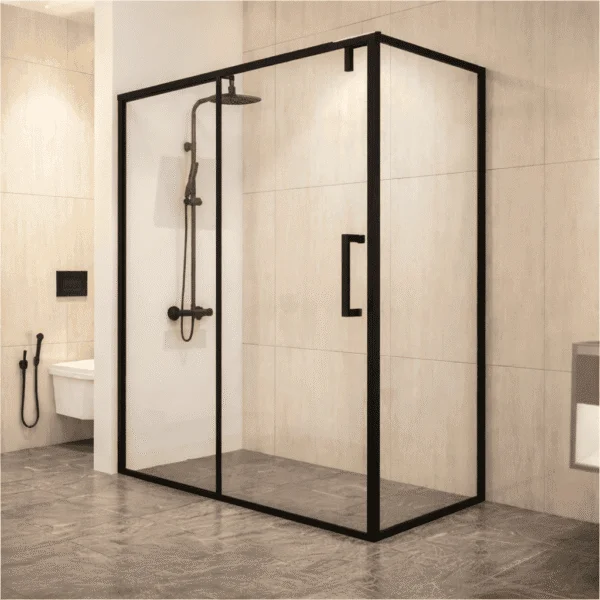
Sliding shower enclosures run on a track, with doors gliding side to side rather than swinging outward — which makes them the go-to option for apartments, urban homes, and family bathrooms where floor space is tighter and a swinging door just isn’t practical.
Like swing enclosures, sliding versions come in frameless, semi-framed, and framed builds, each trading off slightly differently between minimalism and structural robustness.
The main thing worth checking with any sliding system is the quality of the track and rollers — a smooth, quiet glide is a sign of decent hardware, while stiffness or noise early on tends to only get worse over time.
Slide Fold Shower Enclosures and Walk-In Shower Cabins
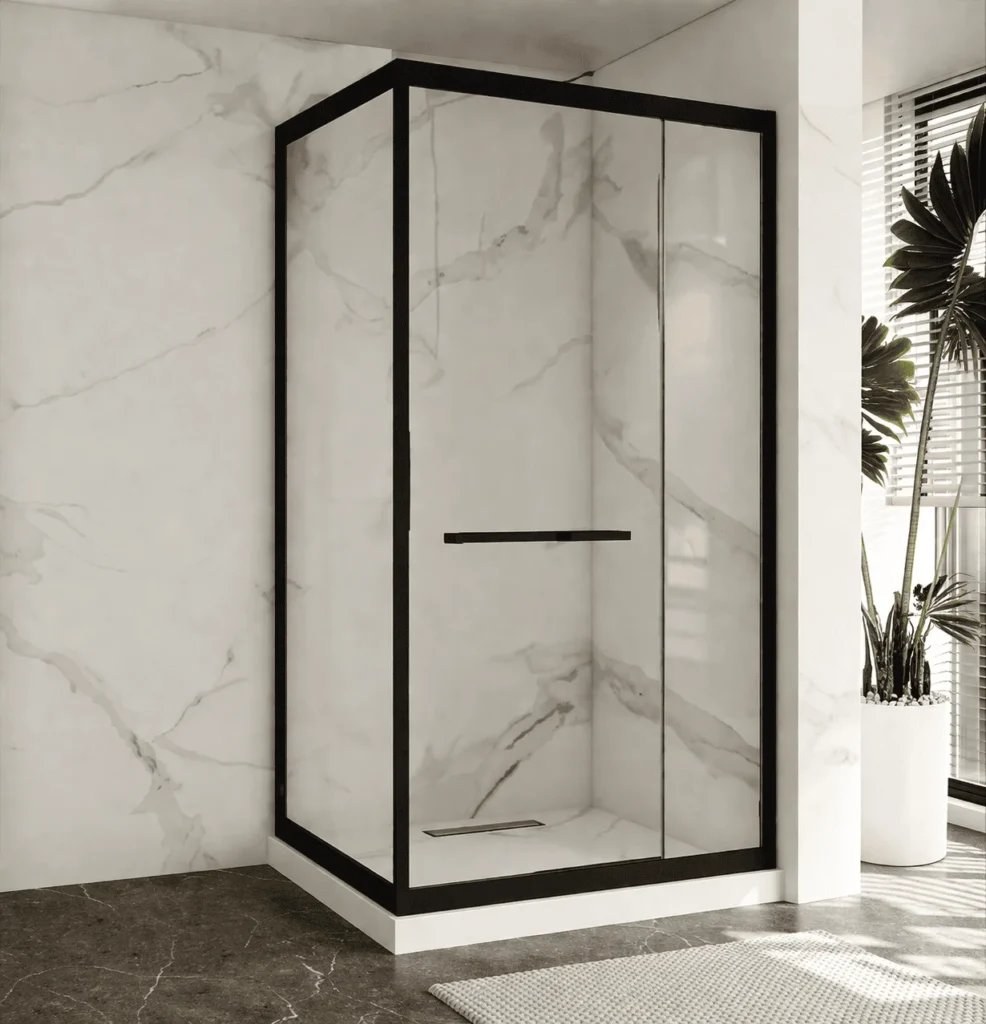
For genuinely tight spaces — studio apartments, guest bathrooms, small ensuites — slide fold shower enclosures fold inward instead of sliding flat or swinging out, saving floor space neither of the other two designs quite manages. Makes them one of the more space-efficient shower cabins going, for a small bathroom footprint specifically.
A walk-in shower cabin follows an approach that is worth considering. An entry that is more open and has fewer barriers. This type of design works in spaces where there is enough room to create a real sense of openness and luxury. There are no folding or sliding parts that get in the way.
Framed, Semi-Framed, or Frameless: What Actually Changes
This choice affects both looks and practicality more than people expect going in. Frameless designs lean on thicker toughened glass and barely-there hardware, giving the cleanest, most modern look — but they cost more and need genuinely precise installation to sit right.
Framed enclosures wrap a full metal frame around the glass, giving the most structural support and usually the friendlier price tag, though the frame stays visually present in the room either way. Semi-framed splits the difference — partial framing for durability, without the fully boxed-in look a traditional framed unit has.
Neither’s objectively the better pick. Comes down to budget, the bathroom’s style, and how much structural support the install actually calls for.
What to Check Regardless of Style
Glass quality matters more than nearly anything else here. Toughened safety glass is the standard for good reason — built to handle daily use, and if it ever does break, it shatters into small, blunt pieces instead of sharp shards.
Hardware finish and resistance to rust or corrosion decide how the enclosure holds up over years of constant moisture, not just how it looks the day it’s installed. Cheap hardware is usually where a seemingly good-value enclosure starts looking worn within a year or two.
Custom sizing is worth asking about directly if your bathroom’s got any non-standard dimensions or an awkward corner — a custom shower enclosure built to the space’s exact measurements skips the gaps and misalignment that come from cramming a standard size into a layout it was never meant for.
Why HM Innovation’s Approach Makes This Easier
HM Innovation, based in Mohali, builds its shower enclosure range around exactly this spread of options — swing, sliding, and slide fold systems, each available in frameless, semi-framed, and framed builds, plus walk-in shower cabins for bathrooms wanting a more open layout.
Every enclosure uses toughened safety glass and rust-resistant hardware, and custom sizing’s available for bathrooms that don’t fit a standard template — which, once you actually start measuring, covers a fair number of real-world layouts.
Final Thoughts
Choosing the right shower enclosure really comes down to being honest about your bathroom’s actual size and layout before getting distracted by finishes and styles.
Swing enclosures where there’s room to spare, sliding for tighter everyday-use spaces, slide-fold or a walk-in cabin for genuinely compact bathrooms — nail that first call, and the framed-versus-frameless decision turns into a much easier, more straightforward one from there.