
There’s a specific kind of dread that hits when a modular railing systems sub calls you two weeks before handover asking for “just a few more days.” You know that call. Maybe you’ve made that call yourself. And it’s rarely about the flashy stuff; it’s a railing—a part of the building that should’ve been the easy part.
Nobody tells you this early in your career, but railings aren’t decoration. They’re the thin line between a building looking finished and someone actually getting hurt on it, and yet, on most projects, they were specced last, budgeted worst, and handed off to whoever was cheapest and available that month.
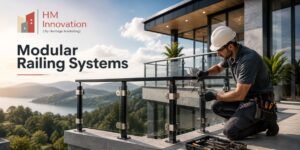
Hm Innovation it’s whole approach is around fixing that exact gap, treating railings like an engineered product instead os a trade you squeeze in at the end. Modular railing systems are quietly becoming the fix for all of it. Once you see why, it’s hard to go back to doing it the old way.
What Is a Modular Railing System?
A modular railing system is built from standardized, pre-engineered parts – posts, base plates, infill panels, and handrails that bolt or clamp together on site instead of getting torch-welded from scratch by whoever showed up that day.
Kind of like buying furniture from a manufacturer who actually tested the joints, instead of hiring a guy to build it from raw lumber in the parking lot. Same result, way less guessing involved.
For architects, that’s kind of a gift, honestly. You’re pulling from a system that’s already been engineered and load-tested, and your job becomes picking the finish, the infill, the spacing – not re-solving structural math from scratch on every single project.
Key Components of a Modular Railing System
- Posts and base plates — the structural skeleton, engineered for consistent load ratings
- Infill panels — glass, cable, bar, or mesh, swapped in without changing the post structure
- Handrails and connectors — standardized fittings that keep every joint predictable
- Fasteners — bolts and clamps instead of field welds, built for long-term reliability
Why Modular Railing Systems Improve Job Site Safety
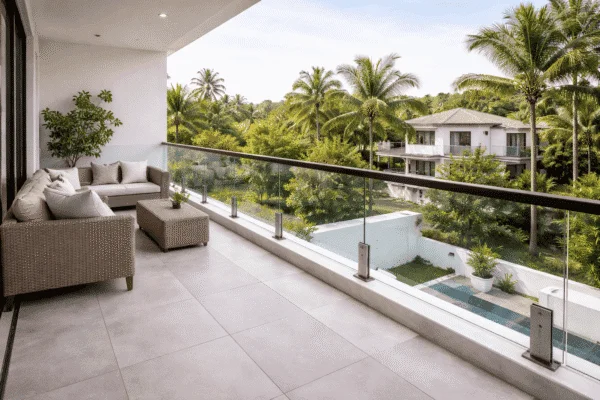
Let’s be honest, nobody clocks a railing until the day it fails. That’s just the nature of this category; it’s invisible right up until it isn’t. A system that’s already been load-tested and code-rated takes a huge chunk of that liability worry off your plate before you even sign off on the spec.
Consistent Engineering Across Every Unit
When every post and connector comes off the same tested batch, you’re not gambling on whether the welder had a good day or a rushed one. That consistency is the whole safety argument in one sentence.
Easier Building Code Compliance
Good modular systems are built to follow IBC or ADA standards from the start. This means you will not have to deal with a talk with an inspector three weeks before handover. You also will not have to rush to fix things that should have been done correctly the first time.
Fewer Long-Term Failure Points
Mechanical fastening tends to age more predictably than a field weld, especially somewhere coastal or humid, where corrosion loves to hide inside a bad weld seam nobody checked twice.
How Modular Railing Systems Support Better Design
This is the part that trips people up. They hear “modular” and picture something flat and generic, but honestly it’s the opposite. Because the structural engineering’s already solved, you actually get more room to play with the design.
Flexible Material and Finish Options
Glass, cable, horizontal bar, powder-coated aluminium, or wood-look composite everyone’s into it lately. A lot of these systems let you swap infill types on the same post structure.
So a developer can run one railing family across an entire building and still make the penthouse feel different from the parking garage, without it reading like two different budgets. That consistency actually looks intentional. Like someone designed it on purpose instead of grabbing wherever was cheapest at each stage.
Fewer On-Site Surprises
Anyone who’s watched a custom rail field-adjusted for the third time in one afternoon knows exactly what I’m talking about. Modular pieces are pre-dimensioned, so what arrives is what goes in.
Less improvising, less “ we’ll just fix it in the field,” more of your actual design surviving all the way to the finished building.
The Durability Advantage of Modular Railing Systems
Nobody wants that callback. The one where a railing’s gone wobbly, or it’s rusting out quietly at the base plate where nobody thought to look. Modular systems, at least from a manufacturer that knows what they’re doing, tend to hold up better here for reasons that are honestly pretty unglamorous.
- Materials come from a consistent, traceable source instead of whatever the fabricator happened to have lying around that week
- Finishes like anodizing or marine-grade stainless get applied in a controlled shop environment, not on a windy job site with dust blowing everywhere
- Panels are usually designed so you can swap a single damaged piece instead of tearing out a whole section
Why Modular Railing Systems Matter for Large-Scale Projects
If you’re a contractor juggling dozens, or hundreds, of units, modular railing stops being a nice-to-have and turns into a scheduling lifesaver. Crews install faster because there’s no on-site welding, no wet trades holding up the next crew behind them.
Fewer subs on site, less coordination chaos, and an installation timeline you can actually say out loud to a client without crossing your fingers behind your back. For architecture firms working across a few different markets, there’s another angle too. One spec can travel with you just like HM Innovation.
A system engineered around a solid code baseline adapts to different jurisdictions a lot easier than a fully custom design that needs re-engineering from zero every single time.
Final Thoughts
Modular railing isn’t the hero of the story; it’s never going to be the thing someone Instagrams. But it’s one of the few products quietly doing three jobs at once, keeping people safe, holding up the design vision, and lasting decades without drama.
Whether you’re an architect protecting your design intent through construction, a builder racing a brutal deadline, or a developer thinking five years ahead about maintenance costs… this is the kind of decision that pays for itself without anyone noticing.